What is adventure photography: capturing Iceland's beauty
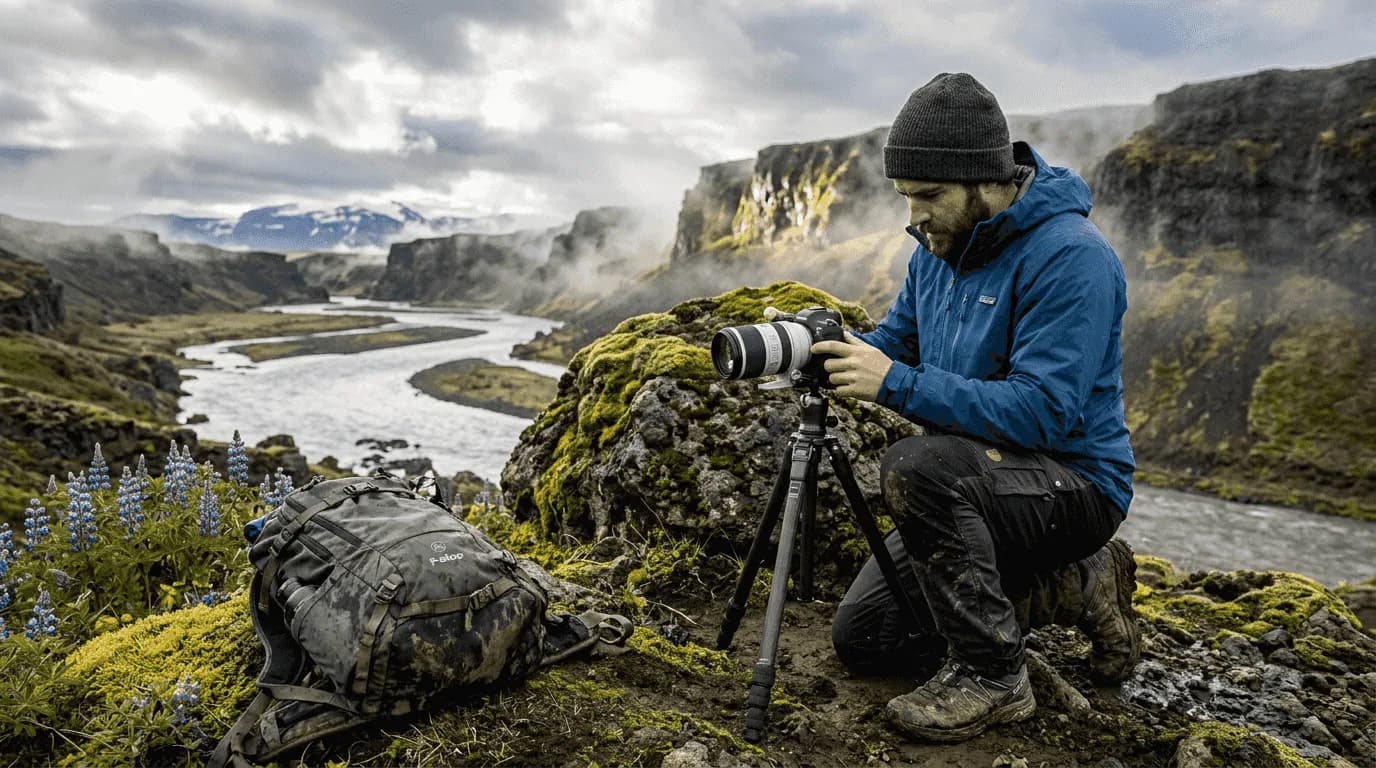
What is adventure photography: capturing Iceland's beauty ! Photographer works in rugged Icelandic landscape Adventure photography is often misunderstood as simply taking dramatic landscape shots, but it's far more complex.
What is adventure photography: capturing Iceland’s beauty
Adventure photography is often misunderstood as simply taking dramatic landscape shots, but it’s far more complex. True adventure photography expertise combines technical skill, environmental challenges, and storytelling through human interaction with rugged settings. Iceland’s volatile weather, dramatic terrain, and remote locations make it an ideal testing ground for understanding what truly defines this distinctive photographic genre.
Table of Contents
- Defining Adventure Photography: What Makes It Unique?
- Environmental And Geographical Factors In Iceland
- Essential Gear And Equipment For Adventure Photography
- Technical Techniques In Adventure Photography
- Storytelling And Emotional Connection In Adventure Photography
- Common Misconceptions About Adventure Photography
- Comparing Adventure Photography With Related Genres
- Preparation And Risk Management In Icelandic Adventure Photography
- Explore Professional Adventure Photography Services In Iceland
Key takeaways
| Point | Details |
|---|---|
| Adventure photography definition | Combines landscape elements with human storytelling in extreme environments, requiring adaptability and technical mastery. |
| Iceland’s unique challenges | Rapid weather changes every 5 to 10 minutes, volcanic fields, glaciers, and remote terrain demand constant adjustment. |
| Essential gear requirements | Weather sealed cameras, wide angle lenses, backup batteries, and safety equipment ensure success in harsh conditions. |
| Storytelling importance | Candid human moments and emotional connections transform technical shots into compelling narratives. |
| Genre distinctions | Unlike pure landscape work, adventure photography centers on dynamic human environment interaction and risk. |
Defining adventure photography: what makes it unique?
Adventure photography combines technical skill with environmental unpredictability and human storytelling. This genre integrates landscape beauty with authentic human experiences in extreme or rugged locations. The photographer must adapt quickly to changing conditions while capturing both environmental drama and human emotion.
Unlike traditional landscape photography, adventure work focuses on dynamic interactions between people and their surroundings. You’re not just documenting a waterfall or mountain range. You’re capturing the experience of someone standing before that waterfall, their expression revealing the raw power of nature.
Key characteristics that define adventure photography:
- Authentic human subjects engaged with challenging environments
- Technical adaptability to unpredictable weather and lighting
- Narrative focus showing journey and experience
- Physical risk and environmental extremes as context
- Emotional storytelling through composition and timing
Pro Tip: When shooting adventure content, position yourself to capture both the subject’s reaction and the environmental context that provokes it. This dual focus creates powerful storytelling moments.
The distinction matters because it shapes every decision you make. Equipment choices, timing, composition, and even your physical positioning all serve the goal of authentic storytelling. You’re documenting experience, not just scenery.
Environmental and geographical factors in Iceland
Iceland presents unique challenges that define adventure photography execution. Weather changes every 5 to 10 minutes requiring constant technical adjustment. This volatility transforms routine shoots into adaptive challenges where you must respond instantly to lighting, precipitation, and visibility shifts.
The landscape itself offers dramatic variety within compact distances. Volcanic fields create stark black sand contrasts, glaciers provide ethereal blue backdrops, and countless waterfalls add dynamic motion elements. Each terrain type demands different technical approaches and safety considerations.
Iceland’s geographical challenges for photographers:
- Extreme weather variability with rain, wind, and sun in single outings
- Remote locations requiring extensive travel and planning
- Limited daylight hours in winter, extended golden hours in summer
- Volcanic terrain with sharp rocks and unstable surfaces
- Glacial environments needing specialized safety knowledge
| Landscape Type | Primary Challenge | Technical Requirement |
|---|---|---|
| Volcanic fields | Sharp terrain, black surfaces absorbing light | Fast lenses, protective footwear, exposure compensation |
| Glaciers | Extreme brightness, safety risks | Polarizing filters, crampons, guide coordination |
| Waterfalls | Moisture, variable light | Weather sealing, ND filters, quick adjustments |
| Coastal areas | Wind, salt spray | Lens protection, fast shutter speeds |
Lighting conditions shift rapidly as weather systems move through. You might start shooting in diffused overcast light ideal for waterfalls, then suddenly face harsh direct sun requiring different exposure settings. This unpredictability means you cannot rely on preset camera configurations.
Pro Tip: Always scout locations with multiple weather scenarios in mind. Iceland photography tips emphasize having backup compositions ready when conditions force rapid changes.
Remote terrain requires thorough preparation beyond camera gear. Many stunning locations sit hours from services, making equipment failure or injury serious concerns. Why shoot in Iceland becomes clear when you experience how environmental extremes push your creative and technical boundaries simultaneously.
Essential gear and equipment for adventure photography
Weather sealed cameras and lenses protect against Iceland’s moisture, dust, and temperature fluctuations. Standard photography equipment fails quickly when exposed to constant mist from waterfalls, volcanic dust, or sudden rain squalls. Professional bodies and lenses with gasket sealing provide necessary protection.
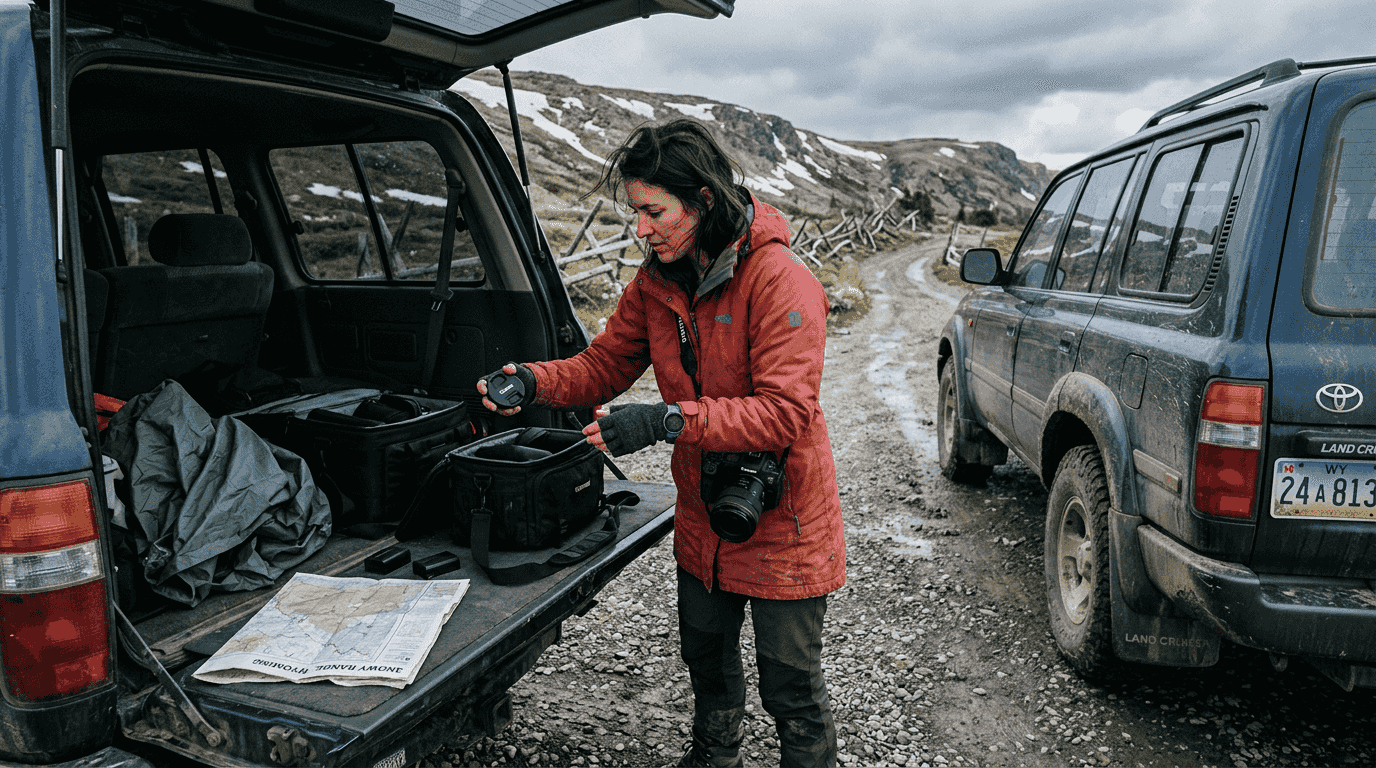
Wide angle lenses capture environmental scale effectively. A 16 to 35mm range allows you to show both your subject and the dramatic landscape context surrounding them. This focal length range tells the complete adventure story in single frames.
Critical camera gear for Icelandic adventure photography:
- Weather sealed full frame camera body with dual card slots
- Wide angle zoom (16 to 35mm) for environmental context
- Fast prime lens (35mm or 50mm f/1.8) for low light flexibility
- Polarizing filter to manage reflections and enhance skies
- Sturdy tripod with spiked feet for unstable terrain
Backup equipment prevents shoot ending failures. Remote locations mean you cannot simply replace a failed battery or corrupted memory card. Carry double everything critical.
Essential backup and support gear checklist:
- Minimum four spare batteries (cold drains power rapidly)
- Multiple high capacity memory cards distributed in different bags
- Lens cleaning supplies including microfiber cloths and solution
- Portable charging solutions or power banks
- Waterproof camera bag with quick access design
- Protective rain cover for camera and lens
Pro Tip: Store spare batteries inside your jacket close to body heat. Cold temperatures can reduce battery life by 50% or more, but keeping them warm maintains performance until you need them.
Safety equipment deserves equal priority with camera gear. GPS devices, emergency communication tools, first aid supplies, and appropriate clothing protect you in remote scenarios. The Iceland photo shoot checklist emphasizes that adventure photography requires photographer survival alongside image capture.
Technical techniques in adventure photography
Shutter speed management separates compelling adventure images from mediocre snapshots. Adjusting shutter speed balances motion clarity with artistic blur, capturing dynamic adventure scenes. Fast speeds (1/500s or higher) freeze action like water spray or jumping, while slower speeds (1/15s to 1/60s) introduce motion blur showing movement energy.
Wide angle lenses emphasize environmental drama and scale. Position your subject within the frame so the landscape context tells part of the story. Telephoto lenses (70 to 200mm) capture candid human expressions and compress background elements for dramatic effect.
Exposure adaptation requires constant attention in variable light. Iceland’s weather creates lighting shifts from bright overcast to dark storm conditions within minutes. Master manual mode or use exposure compensation aggressively to maintain proper exposure as conditions evolve.
| Shutter Speed Range | Effect on Motion | Best Use Case |
|---|---|---|
| 1/1000s or faster | Complete freeze | Action sports, jumping, fast movement |
| 1/250s to 1/500s | Sharp with slight blur in extremes | Hiking, climbing, general adventure |
| 1/60s to 1/125s | Motion hint, mostly sharp | Walking, gentle movement, panning |
| 1/15s to 1/30s | Clear blur, conveys energy | Water flow, intentional motion blur |
| 1s or longer | Smooth blur, ethereal | Waterfalls, clouds, creative effects |
Composition techniques merge environmental and human elements effectively. Use leading lines like rivers or paths to guide viewers toward your subject. Place human figures at intersection points following rule of thirds, but break this rule when environmental drama demands centered or unconventional placement.
Key composition strategies for adventure scenes:
- Include foreground interest to create depth and dimension
- Position subjects to show scale against massive landscape features
- Capture environmental context showing weather or terrain challenges
- Use natural framing from rocks, ice formations, or vegetation
- Balance human subjects with negative space emphasizing isolation or scale
Pro Tip: Shoot in RAW format exclusively for adventure work. Iceland’s extreme lighting conditions often require significant post processing to recover highlight or shadow detail that JPEG compression would destroy.
Photography motion techniques become intuitive with practice, but conscious technical choices separate professional adventure photography from casual snapshots. Every technical decision should serve your storytelling goal.
Storytelling and emotional connection in adventure photography
Incorporating candid human moments and emotional context differentiates adventure photography as a storytelling medium. Technical perfection means nothing without authentic emotion connecting viewers to the experience. Capture genuine reactions, expressions of awe, exhaustion, or joy that reveal the human element.
Spontaneous moments carry more impact than posed shots. Watch for unguarded expressions when your subject first sees a dramatic vista or reacts to challenging conditions. These authentic responses create emotional resonance that staged images rarely achieve.
Composition choices amplify emotional storytelling. Tight framing on a weather beaten face tells a different story than a wide shot showing that same person dwarfed by a massive glacier. Both are valid, but your compositional decision shapes the narrative you’re building.
Storytelling elements that strengthen adventure photography:
- Genuine human reactions to environmental experiences
- Context showing journey difficulty or environmental challenges
- Interaction between subjects and landscape features
- Sequential images building narrative progression
- Details like weathered hands, determined expressions, or equipment
Emotional connection increases viewer engagement dramatically. Images that make viewers feel the cold wind, sense the scale, or empathize with effort create memorable impact. This emotional layer transforms documentation into art.
Pro Tip: Shoot continuously during key moments rather than waiting for the perfect instant. The photographer role in adventure travel includes anticipating and capturing fleeting emotional peaks that happen between traditional poses.
Your goal is creating images that transport viewers into the experience. When someone viewing your photo feels they were there, experiencing that moment, you’ve succeeded in adventure storytelling.
Common misconceptions about adventure photography
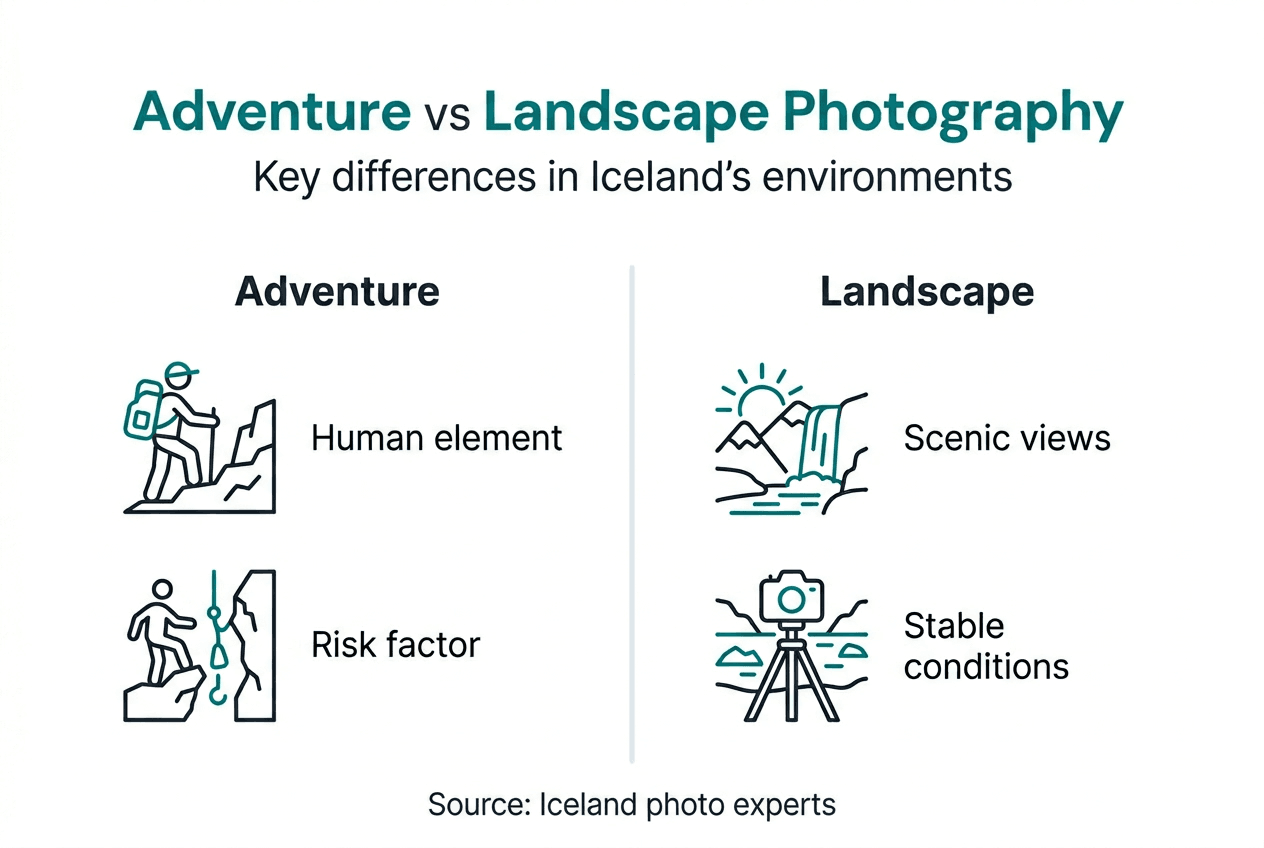
Many assume adventure photography simply means dramatic landscape images. This oversimplification misses the human narrative element that defines the genre. Pure landscape work focuses on scenic beauty, while adventure photography requires human subjects interacting with those environments.
Another misconception treats adventure photography as casual travel snapshots with better cameras. The technical demands, safety considerations, and storytelling complexity distinguish professional adventure work from vacation photos. Specialized skills in exposure management, composition under pressure, and environmental adaptation are essential.
Key misconceptions to avoid:
- Adventure photography is not just about extreme sports or dangerous activities
- Technical quality alone does not create compelling adventure narratives
- Expensive gear cannot compensate for poor storytelling or composition
- Adventure photography requires extensive planning, not spontaneous luck
- The genre demands respect for safety and environmental impact
Some believe any outdoor photography qualifies as adventure work. This dilutes the term and ignores the specific focus on human experience within challenging environments. Adventure photography tells stories of journey, challenge, and interaction that pure nature or landscape work does not attempt.
The misconception that adventure photography lacks artistic merit also persists. Critics sometimes view it as purely documentary when strong adventure work combines technical excellence, artistic vision, and emotional storytelling into cohesive narratives.
Comparing adventure photography with related genres
Adventure photography occupies a distinct space among outdoor and travel photography genres. Understanding these differences clarifies what makes adventure work unique and helps you identify which genre best fits your creative goals.
Landscape photography emphasizes static scenic views without human elements. Composition focuses on natural beauty, dramatic light, and environmental features. Adventure photography incorporates these elements but centers on human environment interaction and experience documentation.
Travel photography covers broader cultural, architectural, and human interest subjects beyond outdoor environments. While travel work might include some adventure elements, it typically lacks the focus on physical challenge and environmental extremes that define pure adventure photography.
| Genre | Primary Focus | Human Element | Risk Level | Narrative Style |
|---|---|---|---|---|
| Adventure Photography | Human interaction with extreme environments | Central to composition | High physical and environmental | Journey and experience driven |
| Landscape Photography | Natural scenic beauty and light | Absent or minimal | Low to moderate | Aesthetic and atmospheric |
| Travel Photography | Cultural experiences and destinations | Present but varied | Low to moderate | Documentary and cultural |
| Nature Photography | Wildlife and natural phenomena | Usually absent | Varies by subject | Educational and observational |
Nature photography documents wildlife and natural processes without human subjects. The technical challenges differ significantly, focusing on animal behavior and natural light rather than human experience and interaction.
Adventure photography demands greater physical risk and environmental challenge engagement. Photographers must navigate the same difficulties as their subjects while maintaining technical excellence. This dual challenge of participation and documentation sets adventure work apart.
The narrative approach also differs fundamentally. Adventure photography tells personal journey stories, while landscape work creates aesthetic experiences and travel photography documents destinations. Each genre serves different purposes and requires distinct skill sets.
Preparation and risk management in Icelandic adventure photography
Nearly half of adventure photographers in Iceland face situations requiring emergency or backup equipment. Thorough preparation prevents minor issues from becoming shoot ending problems or safety emergencies. Planning must address both photographic and survival needs.
Weather monitoring should begin days before your shoot and continue throughout. Icelandic conditions can deteriorate rapidly, making yesterday’s forecast irrelevant. Multiple weather apps and local knowledge provide the best situation awareness.
Essential preparation steps for Iceland adventure photography:
- Research locations thoroughly including access, permits, and seasonal conditions
- Create detailed shot lists with backup options for various weather scenarios
- Inform someone of your itinerary and expected return times
- Pack emergency shelter, food, and water beyond planned shoot duration
- Verify all gear functionality and charge levels before departure
- Study maps and GPS routes for primary and alternate paths
Backup equipment strategy goes beyond extra batteries. Carry a complete second camera body if possible, multiple lenses covering your focal range needs, and redundant memory storage. Equipment failure in remote locations can end shoots or create safety issues if you cannot document your route.
Safety gear requirements for remote Icelandic shoots:
- GPS device with offline maps and route tracking
- Emergency communication (satellite phone or personal locator beacon)
- First aid kit appropriate for environmental hazards
- Weather appropriate clothing in layers with waterproof outer shell
- Emergency blanket and fire starting materials
- High energy food and water purification capability
Pro Tip: The Iceland photo tour planning guide emphasizes building extra time into schedules for weather delays and unexpected opportunities. Rushing in adventure photography increases risk unnecessarily.
Terrain assessment should happen continuously during shoots. Volcanic rock can be unstable, glacial areas present hidden crevasses, and coastal locations face sudden wave risks. Your safety and your subject’s safety always take priority over getting a shot.
Capturing Iceland memories requires balancing creative ambition with practical risk management. Understanding your limits and respecting environmental dangers keeps adventure photography sustainable long term. Some operators even offer Iceland Svalbard cruise deals that combine adventure access with baseline safety infrastructure.
Explore professional adventure photography services in Iceland
Understanding adventure photography theory differs from executing it in Iceland’s challenging conditions. Professional guidance accelerates your learning while ensuring safety and access to optimal locations. Adventure photography services provide expertise honed through years of navigating Iceland’s unique demands.

Experienced photographers know which locations deliver dramatic backdrops during specific conditions and seasons. This knowledge prevents wasted time in suboptimal areas while maximizing your limited shooting windows. Professional services also handle logistics, permits, and safety planning that overwhelm many first time visitors.
The Iceland photography portfolio showcases the storytelling potential when technical skill, environmental knowledge, and artistic vision combine effectively. Whether you’re seeking to document your own Icelandic adventure or improve your photography skills, professional collaboration creates images and experiences that casual attempts rarely match.
FAQ
What gear is essential for adventure photography in Iceland?
Weather sealed camera bodies and lenses protect against moisture and dust in Iceland’s harsh conditions. Wide angle lenses capture environmental scale while backup batteries and memory cards prevent equipment failure in remote areas. Safety gear including GPS devices and emergency communication tools are equally critical.
How can I capture storytelling elements in adventure photography?
Prioritize candid moments showing genuine reactions to environmental challenges and beauty. Connect human emotions directly to landscape context through composition that includes both subject and surroundings. Focus on authentic interactions with nature rather than posed shots to create compelling narratives.
What are the biggest challenges of adventure photography in Iceland?
Rapid weather changes every 5 to 10 minutes require constant technical adjustments to exposure and composition. Rugged volcanic terrain and remote locations create logistical challenges for access and safety. Equipment protection from moisture and extreme conditions demands specialized gear and backup planning.
How does adventure photography differ from landscape photography?
Adventure photography incorporates human subjects and their experiences interacting with challenging environments, creating narrative driven images. Landscape photography focuses on static scenic beauty without human elements or storytelling components. Adventure work demands greater adaptability, safety awareness, and emphasis on journey documentation.
Recommended
- Why Shoot in Iceland: Transform Experiential Photography
- Role of Photographer in Adventure Travel: Creating Impact
- 7 Best Iceland Photography Ideas 2026 for Adventurers
- Step-by-Step Guide to Capturing Iceland Memories
- 7 Tips for Exciting Photography Scavenger Hunts – The Zoofamily
- Best Iceland Svalbard Cruises 2026 | Iceland Svalbard Cruise Deals