Iceland Photography Tips: 80% Lens Guide for Stunning Shots
Iceland Photography Tips: 80% Lens Guide for Stunning Shots ! Photographer selects lens in Iceland landscape Capturing Iceland's dramatic landscapes and intimate portraits can feel overwhelming when you're unsure which gear will handle the country's unpredictable weather and unique lighting.
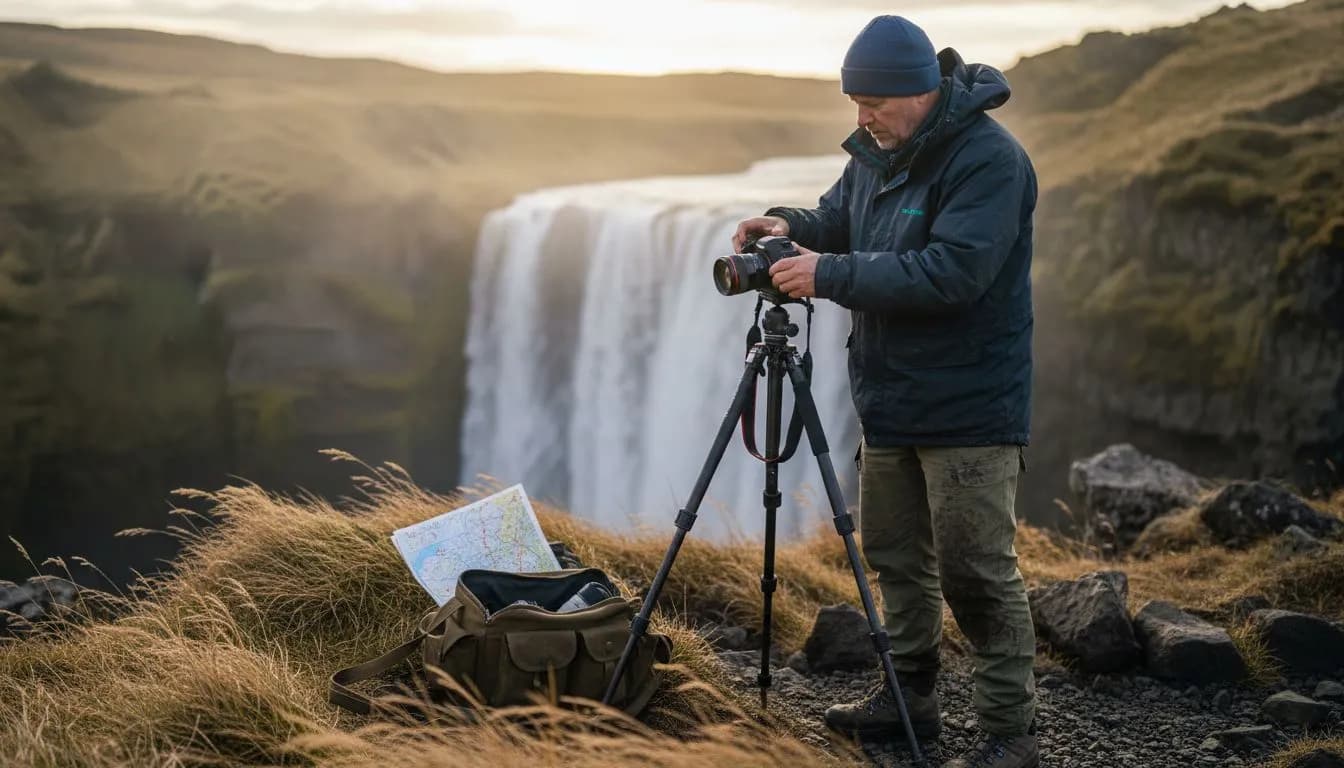
Capturing Iceland’s dramatic landscapes and intimate portraits can feel overwhelming when you’re unsure which gear will handle the country’s unpredictable weather and unique lighting. Many travelers return home disappointed because they packed the wrong lenses or missed the best shooting windows. This guide simplifies your choices by focusing on the essential gear and techniques that meet 80% of Icelandic landscape photography needs, helping you prepare confidently for stunning shots during your adventure.
Table of Contents
- How To Choose The Best Camera Gear For Iceland
- Timing And Light Conditions For Capturing Iconic Iceland Photos
- Weather And Gear Preparation For Iceland Photography
- Composition And Photo Techniques For Iceland’s Landscapes And Portraits
- Summary Comparison And Situational Recommendations
- Discover Expert Iceland Photography Services
- Frequently Asked Questions
Key Takeaways
| Point | Details |
|---|---|
| Versatile lens selection | A 24-70mm f/2.8 lens covers most landscape and portrait scenarios, while wide-angle and telephoto options handle specialized shots. |
| Extended golden hours | Iceland’s high latitude creates longer golden and blue hours, offering premium lighting windows for photography. |
| Weather protection essential | Over 70% of days bring precipitation, requiring rain covers and weather-sealed gear to prevent damage. |
| Composition depth matters | Using foreground elements and neutral density filters creates compelling images with balanced exposure. |
| Winter aurora preparation | Long winter nights from September to March provide optimal conditions for Northern Lights photography. |
How to Choose the Best Camera Gear for Iceland
Selecting the right lenses for Iceland requires balancing versatility with protection against harsh conditions. The landscape demands equipment that handles everything from sweeping volcanic vistas to intimate waterfall details.
Wide-angle lenses in the 16-35mm range capture Iceland’s expansive scenery perfectly. These lenses let you frame entire glaciers, black sand beaches, and dramatic skies in single compositions. For maximum flexibility, a 24-70mm f/2.8 standard zoom lens covers 80% of Icelandic landscape photography needs, handling both sweeping vistas and closer environmental portraits without lens changes in difficult weather.
Telephoto lenses like 70-200mm or 100-400mm are essential for capturing intricate glacier details and distant wildlife. These longer focal lengths compress distance beautifully, making layered mountain ranges more dramatic and allowing you to photograph puffins or Icelandic horses without disturbing them. The compression effect also creates stunning portrait backgrounds where Iceland’s landscapes become artful backdrops.
Weather sealing is non-negotiable in Iceland. Rain, mist from waterfalls, and blowing volcanic sand threaten unprotected gear constantly. Invest in weather-sealed camera bodies and lenses, and always carry rain covers. Pack microfiber cloths to wipe moisture from lens elements between shots.
Keep your kit compact for travel convenience. Three to four versatile lenses balance quality coverage with manageable weight. Consider why Iceland’s unique conditions demand this thoughtful approach to gear selection.
Essential gear checklist:
- Weather-sealed camera body with backup battery
- 24-70mm f/2.8 as primary lens
- Wide-angle 16-35mm for landscapes
- Telephoto 70-200mm for details and wildlife
- Rain covers and lens cloths
- Sturdy tripod for long exposures
Pro Tip: Test your rain covers before departure. Practice quick deployment so you can protect gear instantly when weather changes, which happens frequently in Iceland.
Explore more about best lenses for landscape photography to refine your gear decisions for Iceland’s diverse shooting environments.
Timing and Light Conditions for Capturing Iconic Iceland Photos
Iceland’s extreme latitude creates lighting conditions unlike anywhere else, offering photographers extended shooting windows and dramatic natural light shows. Understanding these patterns transforms good photos into exceptional ones.
Iceland’s golden hour and blue hour last significantly longer, offering extended windows of optimal light. During summer months, sunset transitions directly into sunrise with barely any darkness, creating hours of soft, directional light perfect for landscapes and portraits. This extended magic hour means you can shoot continuously without harsh midday conditions interrupting your work.
Winter brings different advantages. From September through March, long nights provide ideal conditions for aurora borealis photography. The Northern Lights appear most frequently during solar maximum periods, and Iceland’s position just below the Arctic Circle offers excellent viewing without extreme cold. Clear, moonless nights between 10 PM and 2 AM typically provide the best aurora displays.
Avoid midday summer shooting when possible. The high sun creates harsh shadows and washed-out skies that flatten landscapes. Instead, use midday for location scouting, gear maintenance, or rest before evening sessions. If you must shoot midday, focus on waterfalls where mist softens light naturally, or work inside ice caves where ambient light remains constant.
Timing visits to popular locations reduces crowds and improves lighting. Arrive at waterfalls and glaciers during golden hour when tour buses have departed. Early morning shoots at places like Seljalandsfoss or Skógafoss often provide solitude impossible during peak hours.
Optimal shooting times:
- Golden hour: 1-2 hours after sunrise and before sunset
- Blue hour: 30-45 minutes after sunset and before sunrise
- Aurora season: September through March, 10 PM to 2 AM
- Ice cave visits: Winter months when formations are stable
- Waterfall photography: Early morning or evening for best light
Pro Tip: Download aurora forecast apps like Aurora Forecast or My Aurora Forecast. These tools predict Northern Lights activity 24-48 hours ahead, helping you plan shooting locations when displays will be strongest.
Learn more about choosing Iceland photo locations to maximize your time during premium lighting windows.
Weather and Gear Preparation for Iceland Photography
Iceland’s weather reputation is well-earned. Photographers must prepare for rain, wind, temperature swings, and volcanic dust, often experiencing all four in a single afternoon. Proper preparation protects your investment and ensures you keep shooting regardless of conditions.
Over 70% of days in many Iceland regions experience precipitation, making gear protection crucial. Invest in high-quality rain covers that fit your camera and lens combinations. Peak Design and Think Tank Photo make excellent options that deploy quickly. Keep covers accessible in outer pockets, not buried in your bag where they’re useless when sudden rain hits.
Dress in technical layers designed for active outdoor photography. Base layers should wick moisture, mid layers provide insulation, and outer shells must be waterproof and breathable. Your hands need protection too, so bring photographer’s gloves with flip-back fingers that allow precise camera control without exposing skin to cold.
Condensation threatens lenses when moving between temperature extremes. When entering heated vehicles or buildings after cold shooting, seal your camera in a plastic bag before bringing it inside. This prevents condensation from forming on cold lens elements and internal electronics. Let gear warm gradually inside the sealed bag before removing it.
Cold temperatures drain batteries rapidly. Carry at least two spare batteries per camera body, keeping spares warm against your body in inner jacket pockets. Swap batteries proactively rather than waiting for low-battery warnings. Some photographers use hand warmers wrapped around battery grips to extend shooting time in extreme cold.
Consider insurance for expensive gear. Travel insurance with equipment coverage or specialized camera insurance protects against theft, damage, and loss. Document your gear with serial numbers and photos before departure.
Weather preparation essentials:
- Rain covers for all camera and lens combinations
- Waterproof camera bag with sealed zippers
- Technical layered clothing system
- Photographer’s gloves with flip-back fingers
- Multiple spare batteries stored warm
- Microfiber cloths and lens cleaning solution
- Plastic bags for condensation management
Pro Tip: Pack a small towel dedicated to gear drying. After shooting near waterfalls or in rain, thoroughly dry your equipment before packing it away. Moisture trapped in camera bags promotes mold growth and corrosion.
Review the Iceland photo shoot checklist for comprehensive preparation guidance, and explore gear protection in Iceland for equipment-specific recommendations.
Composition and Photo Techniques for Iceland’s Landscapes and Portraits
Technical gear preparation means nothing without strong composition and shooting techniques. Iceland’s dramatic scenery demands thoughtful framing and exposure management to create images that capture the emotional impact of being there.
Using neutral density gradient filters balances exposure between bright skies and darker land areas, essential in Iceland’s high contrast scenes. The country’s frequent cloud breaks create situations where skies are three to four stops brighter than foreground elements. A 2-stop or 3-stop graduated ND filter positioned horizontally keeps both sky detail and land texture properly exposed in a single frame.
Foreground elements add crucial depth and scale to landscape compositions. Iceland offers abundant options: volcanic rocks, ice chunks on black sand, lupine flowers, or flowing water. Position these elements in your lower third using wide-angle lenses to create visual pathways that lead viewers into the frame. This technique transforms flat landscapes into three-dimensional experiences.
Wide-angle lenses enable dramatic, immersive compositions that place viewers inside scenes rather than observing from outside. Get close to foreground subjects while keeping distant mountains sharp by using apertures between f/8 and f/16. This approach maximizes depth of field and creates the sense of standing at the edge of Iceland’s powerful landscapes.
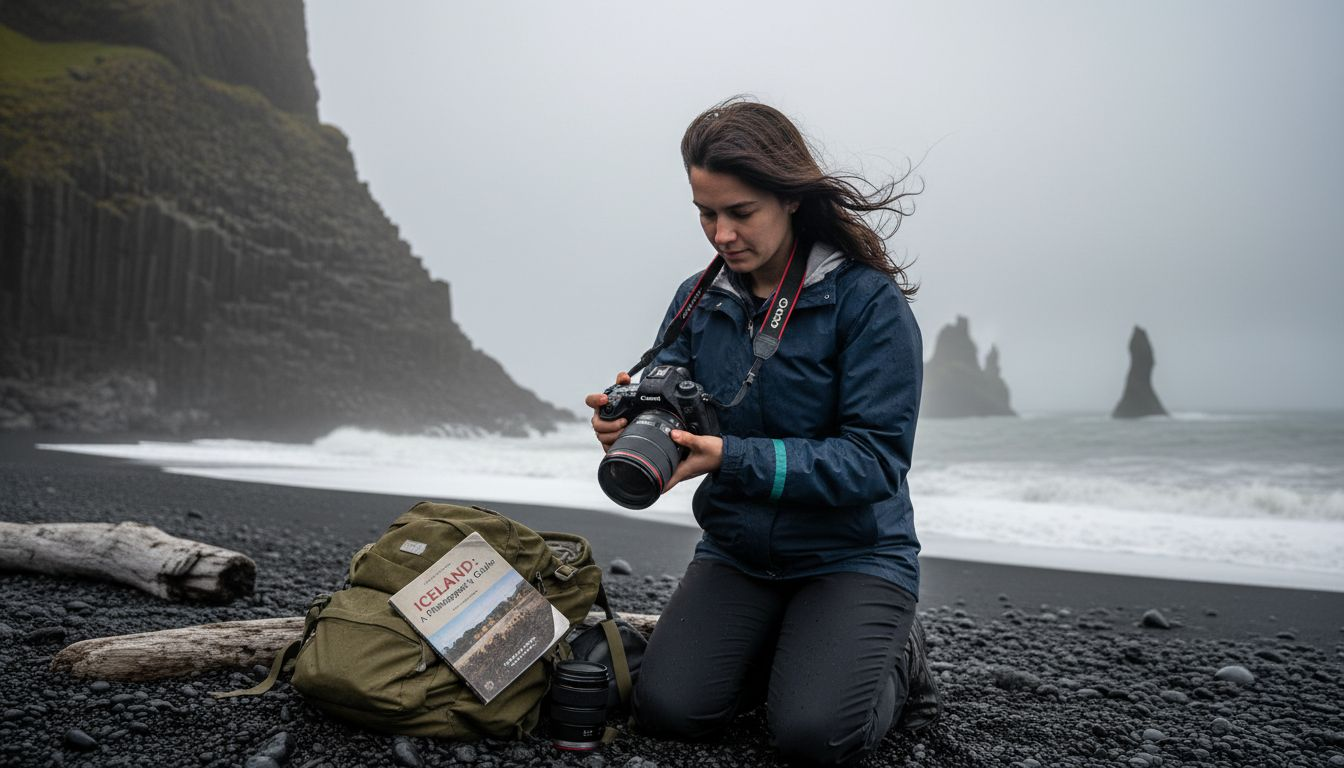
For couple portraits, natural light and Iceland’s landscapes enhance emotions when subjects interact naturally with environments. Instead of posed, camera-facing shots, direct couples to walk together, explore locations, or share quiet moments while you capture candid interactions. Portrait photography benefits from mid-range lenses like 50mm f/1.8 for subject isolation within Iceland’s natural backgrounds, creating images where couples remain focal points while Iceland’s beauty provides context.
Reflectors become valuable tools for portraits in Iceland’s often overcast conditions. A simple silver or white reflector bounces available light onto subjects’ faces, filling shadows and adding catchlights to eyes. This subtle enhancement makes portraits more engaging without appearing artificially lit.
Composition techniques comparison:
| Technique | Best For | Equipment Needed | Skill Level |
|---|---|---|---|
| ND gradient filters | High contrast landscapes | 2-3 stop graduated ND filter | Intermediate |
| Foreground framing | Adding depth to vistas | Wide-angle lens, low perspective | Beginner |
| Wide-angle immersion | Dramatic landscape impact | 16-35mm lens, f/8-f/16 aperture | Intermediate |
| Natural couple posing | Authentic emotional portraits | 50mm lens, directional guidance | Intermediate |
| Reflector fill light | Portrait enhancement | Collapsible reflector, assistant | Beginner |
Essential composition practices:
- Use rule of thirds for balanced landscape framing
- Include strong foreground, middle ground, and background layers
- Shoot in RAW format for maximum editing flexibility
- Bracket exposures in high contrast situations
- Get low to emphasize foreground drama
- Direct couples toward genuine interaction over posed stiffness
Pro Tip: When photographing waterfalls, use shutter speeds between 1/4 and 2 seconds to create smooth, silky water flow. Faster speeds freeze water unnaturally, while slower speeds can make flow look muddy. Experiment within this range to find the perfect balance for each waterfall’s volume and character.
Discover more about why shoot in Iceland for landscape photography opportunities, explore unique couple photography ideas for portrait inspiration, and review best lenses for landscapes and best lenses for portraits for gear optimization.
Summary Comparison and Situational Recommendations
With so many lens options available, deciding what to pack requires understanding specific strengths and situational applications. This comparison helps you match equipment to your Iceland photography priorities.
Lens comparison for Iceland photography:
| Focal Length | Aperture | Best Use Case | Weather Sealing | Portability |
|---|---|---|---|---|
| 16-35mm | f/2.8-f/4 | Expansive landscapes, environmental portraits | Essential | Medium |
| 24-70mm | f/2.8 | General versatility, 80% coverage | Essential | Medium |
| 50mm | f/1.8 | Portrait subject isolation, low light | Preferred | Excellent |
| 70-200mm | f/2.8 | Wildlife, distant details, compression | Essential | Poor |
| 100-400mm | f/4.5-5.6 | Extreme telephoto, bird photography | Essential | Poor |
For expansive landscape priority, the Sony FE 16-35mm f/2.8 GM delivers exceptional sharpness across the frame with reliable weather sealing. This lens handles everything from aurora foregrounds to massive glacier compositions. Budget-conscious photographers should consider the Tamron 17-28mm f/2.8 Di III RXD, which balances cost with impressive sharpness and compact size.
A 24-70mm f/2.8 lens is the most versatile for Iceland landscapes and portraits, complemented by telephoto and mid-range portrait lenses. This focal range covers environmental portraits, medium-distance landscapes, and detail shots without constant lens changes in challenging weather. Every major camera manufacturer offers excellent 24-70mm f/2.8 options.
For portrait-focused trips, the Nikon 50mm f/1.8G provides sharp subject isolation at an accessible price point. This lens creates beautiful bokeh that separates couples from Iceland’s landscapes while maintaining environmental context. The wide f/1.8 aperture also excels in Iceland’s frequently dim conditions.
Travel convenience matters significantly in Iceland where you’re constantly moving between locations. Limit yourself to three to four versatile lenses rather than packing every option you own. A practical kit might include 24-70mm f/2.8 as your primary workhorse, 16-35mm f/4 for wide landscapes, and 70-200mm f/4 for telephoto needs. This combination covers nearly every situation while remaining manageable in size and weight.
Situational recommendations:
- First-time Iceland visitor: 24-70mm f/2.8 only, add wide-angle if budget allows
- Landscape specialist: 16-35mm f/2.8 primary, 24-70mm f/2.8 backup
- Couple/portrait focus: 50mm f/1.8 primary, 24-70mm f/2.8 for environmental shots
- Wildlife interest: 100-400mm telephoto, 24-70mm f/2.8 for versatility
- Aurora hunter: 14mm or 16mm ultra-wide f/2.8 or faster
Understand why shoot in Iceland helps clarify which lens priorities match your photographic goals, and explore lens comparison for Iceland for detailed technical specifications.
Discover Expert Iceland Photography Services
Planning your Iceland photography adventure becomes simpler with professional guidance. Whether you’re capturing landscapes independently or want expert help creating stunning couple portraits against Iceland’s dramatic backdrops, specialized photography services ensure you maximize every moment.
Professional Iceland photographer services provide local expertise, location knowledge, and technical guidance that transform good trips into extraordinary visual stories. Experienced photographers know hidden locations, optimal timing, and how to work with Iceland’s challenging conditions to create images you’ll treasure forever. They understand why shoot in Iceland creates such powerful photographic opportunities and can help you capture those moments authentically. Expert guidance in using natural light in Icelandic photography elevates your images from snapshots to art, whether you’re shooting independently or booking a professional session.
Frequently Asked Questions
Can I use just one lens for all Iceland photography?
A 24-70mm f/2.8 lens covers approximately 80% of Iceland photography situations, making it viable as a single lens choice. However, you’ll miss ultra-wide landscape opportunities and distant wildlife details that specialized lenses capture better.
What’s the best way to protect camera gear from rain in Iceland?
Invest in quality rain covers that deploy quickly and fit your specific camera and lens combinations. Keep covers in accessible outer pockets, and always carry microfiber cloths to wipe moisture from lens elements between shots.
When is the best season to photograph the Northern Lights?
September through March offers optimal aurora viewing, with peak activity typically occurring between 10 PM and 2 AM on clear, moonless nights. Winter months provide longer darkness windows but harsher weather conditions.
How to pose couples naturally in Icelandic landscapes?
Direct couples toward genuine interactions like walking together, exploring locations, or sharing quiet moments rather than posed, camera-facing positions. This candid approach creates authentic emotional connections that reflect their actual experience.
What are quick packing tips to avoid carrying too much gear?
Limit yourself to three to four versatile lenses that cover wide-angle, standard zoom, and telephoto needs. Prioritize weather-sealed options and pack only accessories you’ll genuinely use. Review the Iceland photo shoot checklist for comprehensive guidance on essential versus optional items.